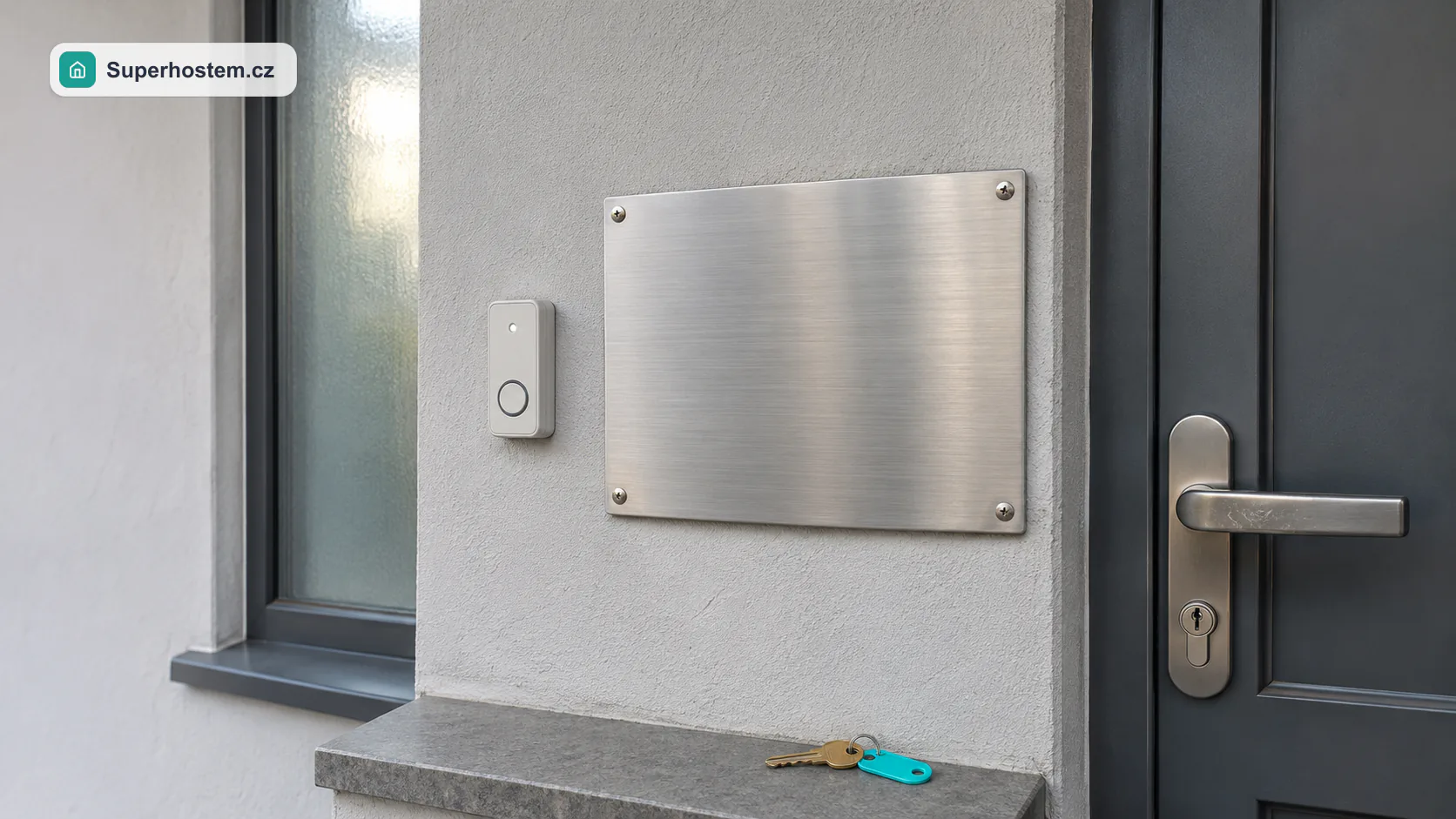
The apartment name is on the door and your surname is on the bell. Guests can find you. That does not necessarily mean the business premises are correctly marked. The property’s brand, the operator’s identity and the details required by trade law are different things.
Start with the actual operator and where the activity takes place. Check the premises notification, right to use the space and required signage. A sign on the door does not itself make accommodation permissible in that apartment.
Registered address, operating premises and apartment name
Your registered business address can be elsewhere. Under Czech trade law, operating premises, provozovna, are the space where you carry out the trade. A marketing name such as ‘Park Apartment’ helps your listing, but may not identify the business providing the service.
If your s.r.o. operates the accommodation, do not automatically put the property owner or key-handover manager down as the operator. The details should match the actual business and the guest’s documents.
The official Trade Register guide summarises premises obligations. It also specifically addresses owner consent where you operate in an apartment you do not own. Declaring a registered business address does not replace checking the other places where you actually work.
Notify first, then check the real setup
Starting a trade at operating premises generally requires advance notification. If the premises were already included in your trade notification or concession application, check before filing the same information again. Verify what was submitted and entered.
Prepare the operator’s identification, premises address or location, activity and starting date. No administrative fee is set for this notification. See the guide to starting at operating premises for details and exceptions.
Registration does not confirm compliance with every other rule. Contractual rights to use the apartment, building-law status and arrangements within the building need their own evidence. Neither a sign nor a register extract bypasses those questions.
What to check on the sign
| Layer | What is involved | Watch out for |
|---|---|---|
| Business identity | Registered business name, name or full personal name; IČO business ID. | An apartment brand is not automatically the operator’s name. |
| Services for consumers | The person responsible for the activity and opening hours for contact with consumers under the relevant rules. | A cleaning-team phone number alone does not correctly identify the responsible person. |
| Establishments providing temporary accommodation | The law also specifies category and class. | Do not guess the classification from your listing name or review stars. |
| Location | Permanent marking visible from outside. | Information hidden in a digital guest guide is not external premises signage. |
The Ministry of Industry and Trade’s statement on accommodation signage also summarises the requirements. For category and class it refers to building rules and the Ministry for Regional Development’s remit. It does not provide a universal sign for every apartment.
Working template: identification without invented stars
Use this structure as a starting point. Replace the bracketed fields with actual information and add the requirements that apply to your establishment. This does not confirm the apartment’s classification.
[Accommodation name]
Operator: [registered business name / full personal name]
IČO: [operator’s business identification number]
Person responsible for the activity: [full name]
Hours for contact with consumers: [actual arrangement]
Category and class: [complete according to verified classification and applicable rules]
Contact: [current guest contact]
An additional contact is useful, but does not replace other required information. Self-service check-in does not mean someone is physically present around the clock. State hours that reflect the real arrangement; do not copy ‘24/7’ just because a code opens the lock.
Where to put the sign and what to agree with the building
Walk the route from the street to the apartment. Guests may only reach its door behind a locked entrance; a small sign inside the flat neither helps them nor necessarily meets visibility requirements. Decide the appropriate location for the space with the relevant authority’s guidance.
If you need a sign on shared parts of the building or the façade, check your right to install it. A trade-law obligation does not give unrestricted permission to alter someone else’s property. Permission for a sign is also not permission for the underlying use of the apartment.
When the manager, company or arrival arrangements change
Add signage to the same change checklist as invoice details and guest instructions. When the responsible person or operator changes, or activity ends, check follow-up notifications and update the details. An old sign after a company change is not just a cosmetic problem.
- The business on the sign is the actual service provider.
- The premises are correctly included in the relevant filings.
- You have evidence of the right to use the space and the necessary owner’s consent.
- The sign has the applicable details, not just a marketing name.
- You have not assigned category or class from guest reviews.
- Guests can find a current contact and the information matches reality.
For preparing the property and operation more broadly, use the checklist before your first booking. Signage is one task, not a replacement for the other conditions.